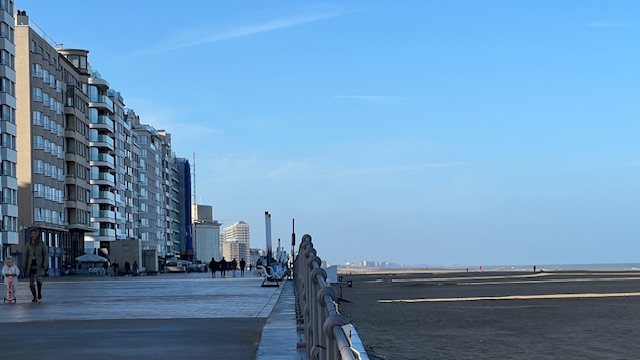
Oostende
After leaving Brugges we headed to the coast, first stop Oostende.
A tourist resort on the coast with a huge promenade and high rise units
A marina with locks and a harbour is in the town , the town is mostly modern as it was largely destroyed in World war 2 and a flood in 1953
We walked down the marina to the promenade stopped for morning tea and tried an egg nog. The orange blocks by the waterfront are “art” , as a canal boat tour leader said if you don’t know what it is , it is called Art.


Nieuwpoort
We drove partially down the coast to Nieuwpoort where we checked out the harbour and canal area, visited Aldi and moved on.


along the canals to Lower Reninge to the Hooipietee restaurant on the IJzer river . We had heard about this restaurant from Krisanne who said the food was amazing and it certainty was , lobster lasagne and John had a seafood gratin dish. The owner offered to do our clothes washing while we dined but we declined as we thought it was a bit weird.


Then on to Ypres where we did a massive wash at the Laundromat.
day 2 Ypres
Sightseeing in this historic war town included a long visit to the flanders, WW1 museum , extremely interesting and very detailed in the wars history. This was another town that was completely destroyed by the Germans during World war 1


A walk around the markt square and lunch then a visit to Saint Micheals church


then over to the Menin gate which was under reno so nothing to see. The picture below is a war memorial in town.

Next we drove to the Lijssenthoek Military Cemetery 12 kms outside of Ypres near Poperinge where there are 10,000 graves including many Australian soldiers and an information site.
The site is where the hospital was and a lot of pilots were buried there too.

The next morning leaving Ypres we saw the Brothers in Arms memorial. This memorial was started when a WW1 Australian soldiers body was found during road works 10 years ago, he was buried by his brother during the war. The man who found the body and organised the memorial talked to us here, he was very interesting.


Then heading south east we went via
Tournai as the church there was meant to be magnificent but it was under repair so not so grand. Its five spires were grand , the square had a small belfry and then a walk through town and back to car left at the train station.


and onto Mons in the rain.
Mons
A town where Martin, Johns ex son in law came from.
We stayed 640 m from the market square, which we explored after the early rain stopped
The grand palace now a hotel had a very ornate gate latch, see below


we wandered the square

Then took a walk to the Belfry , rebuilt after a collapse in 1661 -1669, it has 49 bells in its carillon. We went up the tower here.


the view over Mons( above) was great and then via the spanish house built in the late 16 century.

To the Collegiate church

with a lovely old 14 century coach inside the church that contains a saints body (St Waudru)


A look around the shops and a bit of street art before back to the hotel.
We headed east from Mons first stopping at the Lift f Strepy- Thieu, an enormous lock system with a funicular boat lift which is the largest in Europe and 73 metres of vertical lift. This enormous lock takes barges up in a huge bath tub of water.
We did the 2:5 hour river cruise going through the historical locks, a lifting bridge, a look at the engine rooms and a mobile train back to the Theiu Lock. The trip down the canal du centre reminding us of times on our canal boat Anja.

The Meuse
We crossed country to the Meuse river and followed it down to Dinant. We stopped at a gorgeous French restaurant on the way where the little tastes of French Cuisine was amazing. La Moma.

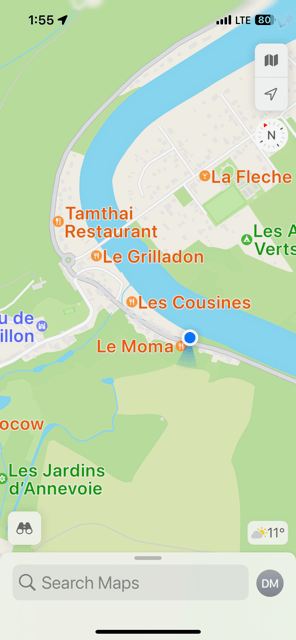

When in Dinant we found parking and our hotel room which overlooked the saxaphone park, and not the river which we thought we had booked.

The Meuse river is in flood and we explore the banks of this lovely town.

Day in Dinant
Started with a visit to the House of Sax which gave us the history of Atelier Adolphe Sax who was born in Dinant in 1814 and developed the saxaphone which was patented in 1846.

Then a look through the Church with its domed roof.


Then up the funicular to the citadelle (1040) and learnt about Dinants war history, where in 1914 the Germans murdered 694 unarmed civilians and took over the town.


The views from the citadelle along the Meuse River and over Dinant were amazing.


After lunch we walked across the bridge where Charles de Gualle was shot in the leg during the 1914 battle. The bridge decorated with saxaphones .


then to the grotto de Dinant le Merveilleuse A large cave but not impressive.

Then back along the waterfront we sat with a beer and listened to a brass band.


After Dinant we moved further east to
Bastogne
We spent most of the day at the bastogne war museum which gave a fantastic historical account of The battle of the Bulge the last major German offensive before the defeat of the Germans in WW2. Then a look at the actual battle field with a few fox holes and forest.


Then the War rooms and cellars which were not really interesting most of information we had seen at the Museum.
We stayed 3 kms out of town in a lovely new flat with full facilities, cheap too. It was surrounded by farms.


The following day we decided to follow small towns and rivers, heading North through the Ardenne Forest. First the L’ourthe river, the town of Houllalize (Houffalize) , then Nadrin


To La roche on Ardenne, such a lovely town.


Durbuy a real tourist town was next then stopping at Bomal for lunch.
Esneux then following the Meuse to near Namur when we detoured north to Waterloo.
The Ardenne mountain and forest region was beautiful with autumn colours in the trees.
There were camping areas everywhere obviously a summer area for sports and kayaking etc.
The trip along the Meuse south and north/west near Namur plus the Ardenne my favourite time in Belgium.


Waterloo our stop for the next two nights.
We visited the Waterloo museum featuring the battle of 1814 with Napoleon and climbed lions monument with 120 steps to the top.


next Brussels
